How The Students Visa Company leveraged influencers to launch Counselify in Sri Lanka
The Students Visa Company spent LKR 475,000 on influencer marketing in Sri Lanka and reached 1.29M views for Counselify's launch. Full breakdown inside.
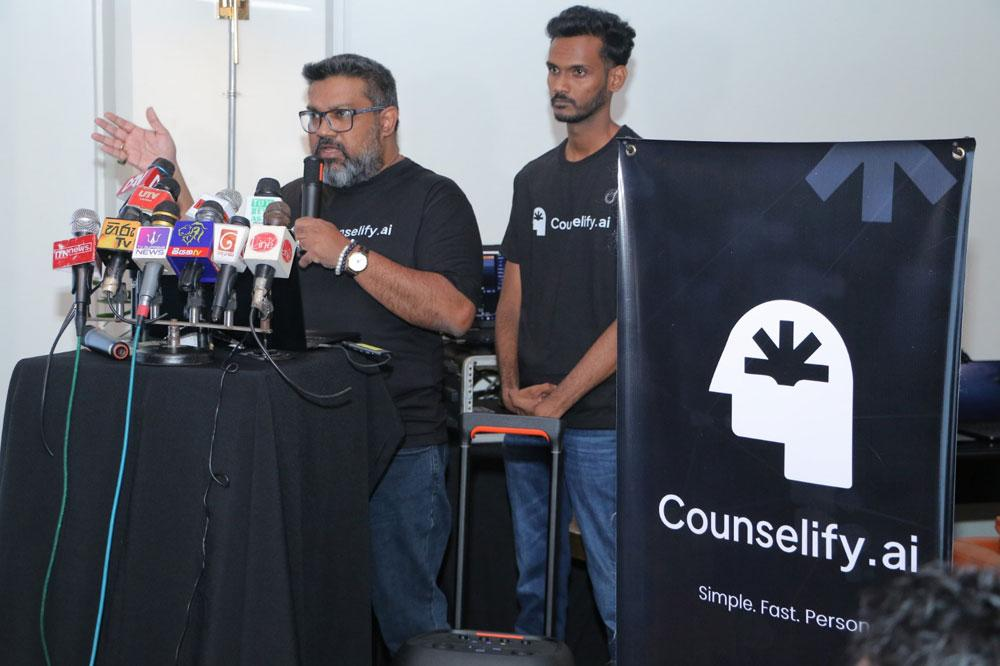
Launching a new product in Sri Lanka's overseas education space is not a gentle exercise. The category is crowded with agencies, consultants, and platforms all chasing the same audience: students between 17 and 25 who are weighing their options, and parents who are often the actual decision-makers. When The Students Visa Company came to fluencr to launch Counselify, their new AI-guided counseling platform, the brief was simple in its ambition and tight in its budget.
The total spend was LKR 475,000. Over the course of the campaign, that bought 1,287,200 views across TikTok, Instagram, and Facebook, spread across four creators, at an average cost of LKR 0.37 per view. This post breaks down how that happened: which creators drove the reach, which platform surprised us, and what the data reveals about influencer marketing in Sri Lanka at this budget level.
If you're evaluating a creator campaign for a product launch in Sri Lanka for the first time, or trying to benchmark what a modest budget can realistically deliver, this campaign is a useful reference point.
What Counselify needed from this campaign
Counselify is a structured guidance platform for Sri Lankan students navigating the overseas education and visa process. It gives students step-by-step counseling access, a layer of clarity that most families don't get from traditional agency consultations. At launch, the product had no brand recognition outside The Students Visa Company's existing client base.
Awareness campaigns for new products have a specific constraint: you're not asking anyone to buy yet. You're asking people to register that something exists, and to form a strong enough first impression that when they're ready to act, they remember you. That is a fundamentally different brief from a conversion campaign, and it shapes every decision that follows, from creator selection to platform choice to the metric you use to judge success.
For Counselify, the target audience split across two very different groups. Students aged 17 to 25 are the product's primary users. Parents aged 35 to 55 are often the ones initiating the conversation and ultimately supporting the decision financially. These two groups don't live on the same platform, and any creator strategy that ignored one to double down on the other was going to leave significant reach on the table.
How the creator mix was built
The campaign ran with four creators: @inked_elike, @sri.verse, @slgeek, and @rizzcado. The mix was intentional. A product launch benefits from appearing in more than one context. When every creator produces the same type of content for the same audience, you're reinforcing a single slice of the market rather than expanding into new ones.
@sri.verse is a lifestyle and travel creator with a broad, general-interest following. @slgeek operates in the tech and education space, which maps closely to what Counselify offers. @rizzcado sits in the student and youth lifestyle category, close to the core Counselify demographic. @inked_elike brings a smaller, more niche audience to the mix.
Each creator posted to TikTok and/or Instagram, with @sri.verse also posting to Facebook. Some posted the same content piece across two platforms, which meant the incremental cost of that additional reach was negligible once the content was produced. That kind of cross-platform reach multiplier is worth planning for deliberately rather than treating as an afterthought. fluencr's creator marketplace lets brands filter creators by platform presence, audience demographics, and content category, which makes building this kind of balanced mix significantly faster than doing it manually.
The numbers: what LKR 475,000 actually bought
The campaign delivered 1,287,200 total views. At a spend of LKR 475,000, the cost per view came out at LKR 0.37.
| Creator | TikTok | Total | ||
|---|---|---|---|---|
| @inked_elike | 15,800 | 11,900 | n/a | 27,700 |
| @sri.verse | 464,900 | 18,400 | 586,000 | 1,069,300 |
| @slgeek | 32,000 | 51,500 | n/a | 83,500 |
| @rizzcado | 49,300 | 57,400 | n/a | 106,700 |
| Total | 562,000 | 139,200 | 586,000 | 1,287,200 |
For reference, paid digital media in Sri Lanka typically runs LKR 1.50 to LKR 4 per view depending on the platform, targeting parameters, and creative performance. A well-optimized Meta campaign with proper audience segmentation will generally land somewhere in that range. At LKR 0.37, the Counselify campaign delivered reach at roughly one-fifth the cost of a comparable paid media buy, based on what we observe across campaigns running through fluencr.
That comparison has limits worth naming. Paid ad views and creator-driven views are not the same thing. Two seconds of a pre-roll ad is not equivalent to 45 seconds of a creator whose audience trusts them talking about a product they actually used. The qualitative difference matters, particularly for a product like Counselify that requires a degree of trust before it converts. But even setting quality aside, the cost-efficiency case for creator campaigns at this budget level is hard to argue with.
The platform split broke down as follows: TikTok drove 562,000 views (43.7% of total), Facebook drove 586,000 views (45.5%), and Instagram delivered 139,200 views (10.8%). Facebook came within 24,000 views of matching TikTok's total reach despite only one creator posting there.
Why one creator carried 83% of the reach
@sri.verse generated 1,069,300 views across her three posts. That is 83.1% of the campaign's total reach. The other three creators combined for 217,900 views.
From a risk perspective, that concentration is worth noting. If @sri.verse's content had underperformed, the campaign's headline number would look substantially different. Campaigns that rely heavily on a single creator are exposed in a way that a more evenly distributed mix is not.
From a selection perspective, the result validates something we see consistently in Sri Lankan influencer marketing: broad lifestyle creators with high organic reach can outperform niche creators significantly when the campaign goal is awareness rather than conversion. @sri.verse's audience is not built around overseas education. It's built around lifestyle, aspiration, and content that feels like a peer talking rather than a brand announcement. For Counselify, which needed to reach students who may not be actively searching for visa counseling yet, that framing is more useful than content that only reaches people already deep in the research process.
@slgeek and @rizzcado, who are closer to the core Counselify demographic, delivered solid numbers relative to their audience sizes. @slgeek's Instagram post reached 51,500 views and @rizzcado's Instagram post reached 57,400, both outperforming @sri.verse on that specific platform. Their audiences are more concentrated on Instagram, which affects where their reach pools. The point is not that niche creators underperformed. It's that the campaign's total reach was driven by a creator whose audience breadth made her the right choice for the awareness objective.
What Facebook did that Instagram didn't
The platform gap in this campaign is striking. Instagram generated 139,200 views in total across all four creators. Facebook generated 586,000 from a single creator's single post.
This is not unusual in Sri Lanka. Facebook's user base skews older than its global reputation suggests, and the 35 to 55 age group remains highly active on the platform locally. For Counselify, where parents are a meaningful part of the decision-making process, Facebook is the platform where that audience lives. A student might discover Counselify on TikTok. Their parent might bring it up because they saw something on Facebook. Both touchpoints serve the campaign's goal, and they reach people at different stages of the same household conversation.
Instagram's relatively lower numbers don't make it the wrong channel for a product like this. Posts on Instagram build a content footprint that supports retargeting, organic discovery, and future paid activity on Meta. For a pure awareness campaign with a fixed budget, though, the Facebook distribution from a creator with a strong following there is worth taking seriously rather than treating as a bonus.
The 586,000-view Facebook post was not planned to be the campaign's single biggest piece of content. It performed because the content resonated and Facebook's algorithm rewarded it. That is partly a function of luck, and partly a function of choosing a creator who has genuinely built an audience on that platform rather than one who cross-posts as an afterthought. The distinction matters when you're briefing creators.
What does this campaign tell you about product launch budgets in Sri Lanka?
Before your next product launch campaign, three questions are worth resolving before you brief a single creator.
First: have you defined whether this is an awareness campaign or a conversion campaign? The creator profile, platform mix, and success metric all change depending on the answer. Counselify needed awareness, which meant prioritizing reach over engagement rate and giving lifestyle creators more weight than niche specialists. A conversion campaign would have looked different in every dimension.
Second: have you mapped your audience to the platforms where they actually spend time, rather than the platforms you assume they use? The Counselify data makes clear that for a Sri Lankan audience that includes parents as decision-makers, Facebook is not a secondary platform. For a meaningful portion of the target market, it is the primary one.
Third: do you have a cost-per-view benchmark before the campaign starts? At LKR 0.37, The Students Visa Company reached 1.29 million people for Counselify's launch at a fraction of what a paid media equivalent would have cost. If you know your number going in, you can evaluate proposals against a real threshold rather than guessing at what good looks like. fluencr's campaign reporting tracks cost-per-view in real time across creator posts, so the benchmark isn't something you calculate in a spreadsheet after the campaign closes.
None of these questions require a large budget to answer. They require clarity before you start spending.
Is LKR 0.37 the number to beat for your next launch?
The Counselify campaign gives Sri Lankan brands a concrete reference point for influencer marketing in Sri Lanka: LKR 475,000 across four creators and three platforms delivered 1.29 million views at LKR 0.37 per view for a product launch in the education and migration category. Whether that number is achievable for your category depends on the product, the audience, and the creator mix, but it's a real number from a real campaign rather than a projection.
One thing the data doesn't capture is what happened after the views. Counselify is a new product, and brand awareness campaigns take time to show up in sign-up numbers. The more interesting question, six months from now, is how many people who saw this content remember Counselify when they're ready to start the process. That's harder to measure, and it's the reason awareness campaigns need to be evaluated on their own terms rather than held to conversion metrics they were never designed to hit.
The key takeaway? A well-structured creator campaign in Sri Lanka can deliver reach at a fraction of paid media cost, but the efficiency only holds when the creator mix is built around the campaign's actual objective from the start.