How Grandeeza leveraged influencers to drive awareness for their wedding exhibition in Sri Lanka
This case study explores how Grandeeza drove 452,000 views and 2,854 shares for its Sri Lanka wedding exhibition through three creators and less than LKR 200,000 in spend.
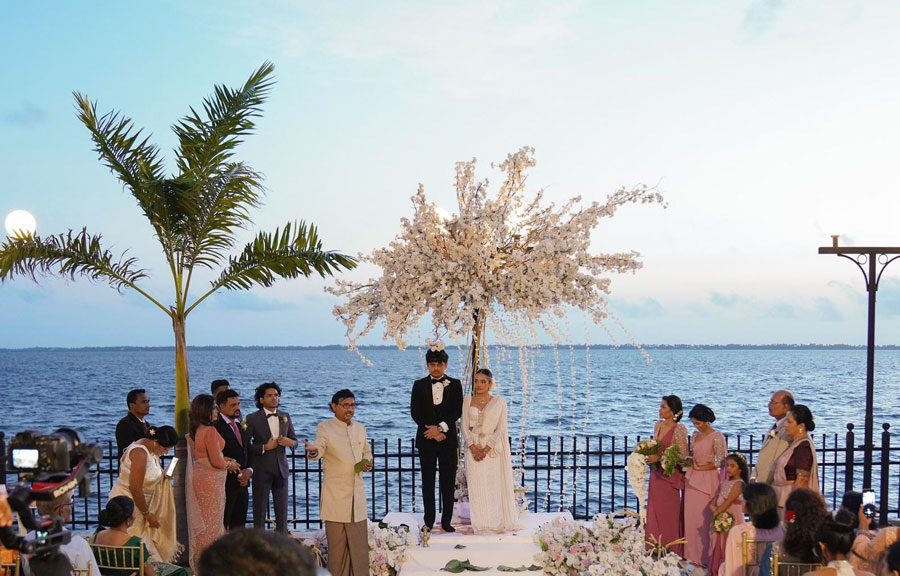
Launching a physical event in Sri Lanka is a test of one thing: can you get the right people to hear about it, care about it, and actually show up? Paid ads can handle the first part. They struggle with the second and third.
Grandeeza, one of Sri Lanka's prominent wedding hotels, faced exactly this challenge ahead of their wedding exhibition in October 2025. The event was two-sided: it needed couples in early wedding planning mode, and it needed to signal credibility and scale to exhibitors. Both audiences live on social media. Both trust creators more than banner ads.
They ran a three-creator campaign through fluencr over the week leading up to the event. Total spend was under LKR 200,000. What followed was one of the cleaner ROI stories we have seen from a physical event launch in the Sri Lankan market, and we want to break it down in full.
Why these three creators
The selection logic was not about follower count alone. All three operate in lifestyle and beauty verticals that index heavily toward Sri Lankan women in their mid-twenties to mid-thirties, the primary demographic for a wedding exhibition.
Chathuvlogs (244,700 TikTok followers) describes herself as a Sri Lankan beauty and lifestyle creator focused on skincare, haircare, and self-love. Her audience skews toward women who are attentive to personal care and aesthetics, both of which are central concerns for anyone planning a wedding. She posted on 30 September, four days before the event.
Chamathka_xo (237,100 TikTok followers) runs a lifestyle, fashion, food, and beauty account in Sinhala. Her content is conversational and high-frequency, and her audience is one of the more engaged cohorts in the Sri Lankan TikTok space relative to her follower base. She also posted on 30 September.
Minon Perera is a verified Facebook creator with a strong Sinhala-language following. Her post on 27 September gave the campaign an earlier launch anchor, building visibility before the TikTok push landed on the same day.
The three-creator structure across two platforms was intentional. TikTok reaches the discovery-mode audience. Facebook reaches the decision-making audience: older, more purchase-ready, and more likely to discuss and share within family groups.
None of the three posts felt like advertisements. That is worth noting explicitly, because it is not accidental.
The numbers
Here is what the campaign produced, pulled directly from each post.
Chathuvlogs (TikTok, 30 September): 40,600 views, 1,158 likes, 28 comments, 150 saves, 498 shares.
Chamathka_xo (TikTok, 30 September): 212,000 views, 11,800 likes, 80 comments, 1,711 saves, 2,356 shares.
Minon Perera (Facebook, 27 September): 200,000 views, 6,000 reactions, 239 comments.
Combined across all three posts: 452,600 total views, approximately 19,000 reactions and likes, 347 comments, 1,861 saves, and 2,854 shares.
The influencer marketing ROI: what the budget actually bought
The spend for this output is strong by any reasonable benchmark. Here is how to think about it.
The three posts combined generated 452,600 views across TikTok and Facebook. At ~LKR 200,000 total, that works out to approximately LKR 0.43 per view. A standard Facebook video awareness campaign in Sri Lanka runs at roughly LKR 200 to 400 per 1,000 views depending on targeting tightness, which puts the equivalent paid media cost for the same 452,600 views at somewhere between LKR 90,000 and LKR 180,000. And that is a conservative estimate for reach alone, before considering that paid ad views carry none of the engagement, saves, or shares that creator content generated on top.
The 2,854 TikTok shares across the two posts are the metric we find most interesting. Shares are the highest-cost action on social media. People do not share branded content unless they genuinely think someone in their network will value it. For a wedding exhibition, a share is functionally an invitation. Someone forwarded these posts to their partner, their mother, their best friend, or their group chat. That behaviour is not purchasable through paid advertising at any price. It comes from content that feels real.
The 1,861 TikTok saves are similarly high-intent. People save content they intend to act on later. In the wedding planning context, saves translate directly to "I want to visit this" or "I want to look into this further."
For the amount spent, the cost per engagement across all four metrics (reactions, comments, saves, shares) works out to approximately LKR 8.12. For a campaign targeting a genuinely purchase-ready audience in a high-consideration category, that number is difficult to achieve through any other channel.
What does this budget buy you through other channels?
To put this in context: the same spend buys roughly two weeks of moderate Facebook ad spend targeting Colombo and surrounding districts, or one quarter-page print placement in a mid-tier publication, or a 30-second radio spot package. None of these generate 2,854 shares, 1,861 saves, or 200,000 views with a 6,000-reaction response.
The comparison is not about dismissing paid media. It is about understanding where creator marketing delivers asymmetric value, and a time-sensitive physical event with a highly specific audience is one of the clearest cases.
What should other Sri Lankan brands take from this?
The Grandeeza campaign is not a fluke. It is a template. A mid-sized budget, three well-matched creators, two platforms, Sinhala-language content, and a four-day pre-event push produced a cost-per-engagement that paid advertising would struggle to match in this category.
The conditions that made it work are replicable: clear event brief, creators who are lifestyle-adjacent rather than category-specific, native Sinhala framing, and a platform split that reaches both the discovery audience and the decision-making audience. Those four conditions apply to almost any physical event launch in Sri Lanka.
The key takeaway? Creator marketing for physical events in Sri Lanka is not a brand awareness play. It is a footfall play. When the content is native and the creators are matched correctly, shares and saves do the work that no paid ad budget can replicate.