Why influencer marketing in Sri Lanka keeps choosing reach over fit
When Sunsilk partnered with Yashoda de Silva, her fans called it out instantly. Here's why influencer brand fit matters more than reach in Sri Lanka.
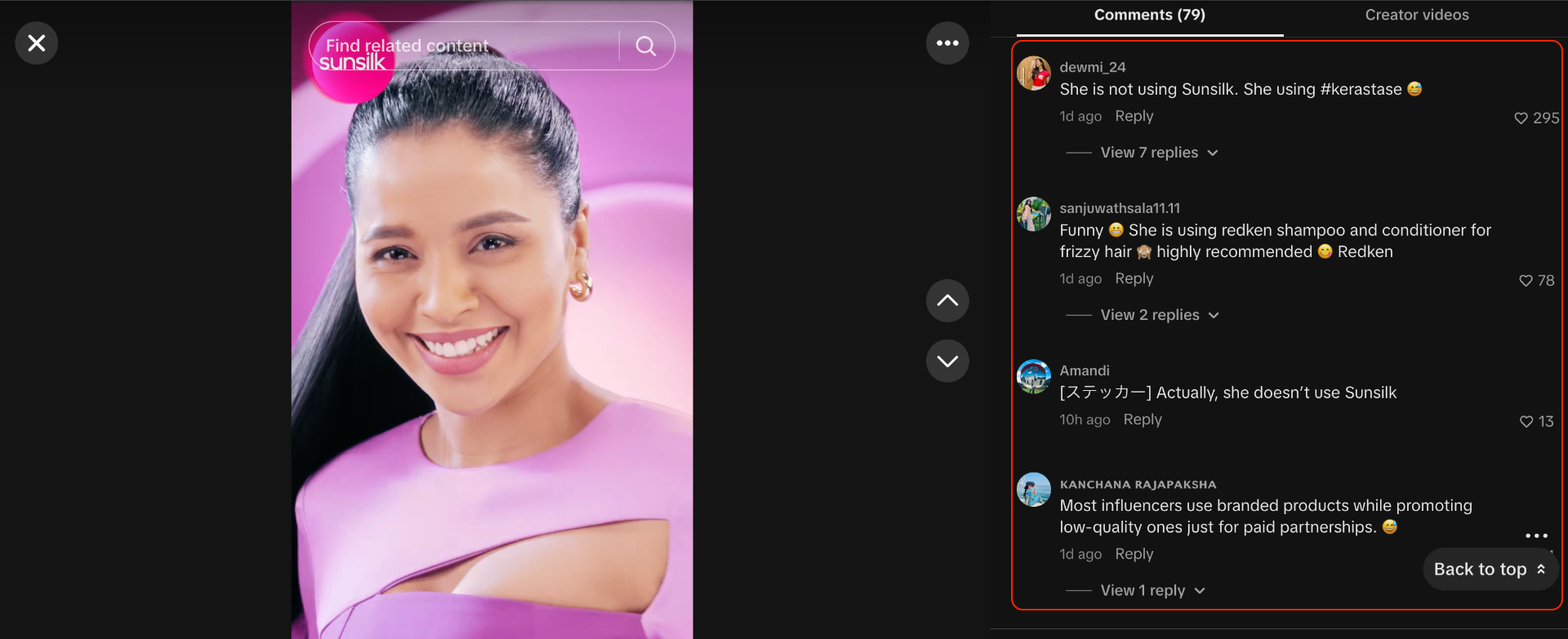
A few days ago, Sunsilk launched a creator campaign featuring Yashoda de Silva, one of Sri Lanka's most recognised YouTube personalities. The ad went up. And within hours, the comment section had one recurring observation from her audience: they know she uses Kerastase.
Not a handful of sceptics. Not a few trolls. Her fans, the exact people Sunsilk paid to reach through this campaign, collectively and publicly pointed out that the product being endorsed did not match the life they had spent years watching her live on screen. Kerastase is a salon-tier hair care line. Sunsilk is a mass-market brand. The gap between the two is not subtle, and her audience knew it before the ad finished loading.
The reach trap in Sri Lanka's creator economy
When a brand starts planning a creator campaign, the first question is almost always the same: how many followers does this person have? It is an understandable starting point. Reach is measurable, comparable, and easy to justify in a budget presentation. You can put it in a cell, divide it by cost, and call it a CPM.
Yashoda de Silva has built one of the most engaged audiences in Sri Lankan digital content. That reach is real and hard-earned. Sunsilk, as a brand with genuine national distribution and a mass-market positioning, would have looked at her numbers and made what appeared to be an obvious call. Large audience. Female skewing. Hair care content adjacent. Sign her.
But follower count tells you how many people might see the ad. It tells you nothing about whether those people will believe it.
What an audience actually knows about their favourite creator
The reason parasocial relationships have commercial value is the same reason they become a liability in mismatched deals. Long-form YouTube audiences follow creators across hundreds of hours of content. They see what products sit on the shelf in the background of a vlog. They notice when a creator's morning routine features one brand and an ad features another. They pay attention in a way that a traditional media audience simply does not.
Yashoda's viewers know her. That is the entire premise of why a brand would want her. And because they know her, they knew something was off.
This is where the reach calculation collapses. A creator with a smaller but genuinely aligned audience will generate more conversion, more trust transfer, and significantly less reputational noise than a creator whose audience publicly rejects the endorsement. The comment section in the Yashoda-Sunsilk case did not just scroll past. It became a public audit of the brand's casting decision, and the audit was not kind.
Why brands in Sri Lanka keep making this mistake
Part of the problem is how briefs get written. A marketing team identifies a target demographic, pulls a list of creators who reach that demographic, sorts by follower count, and picks the top names. Product affinity does not appear as a column in that spreadsheet because it is harder to verify and harder to quantify.
There is also a structural agency problem. Many of the media agencies that broker creator deals in Sri Lanka are evaluated on impressions delivered, not on whether the content actually landed with the audience. If the metric is reach, the recommendation will optimise for reach. No one gets called out three months later for a comment section that went sideways.
Sri Lanka's creator economy adds another layer of complexity. The pool of creators with Yashoda's level of genuine audience engagement across Sinhala and English-speaking demographics is genuinely small. Brands sometimes feel they are choosing from a limited menu rather than finding the right fit. That logic is understandable. It is also how you end up with a comment section full of people naming a competing product.
What a brand fit evaluation actually looks like
Before any deal is signed, there is a set of questions that should be non-negotiable in any creator brief.
Does the creator already use a product in this category? If yes, is it this product or a direct competitor? If it is a competitor, is there a realistic reason they would switch, or is the campaign asking them to act against their own stated preferences in front of an audience that knows those preferences?
What does the creator's existing content communicate about their lifestyle positioning? A creator who regularly features high-end restaurant visits, international travel, and premium skincare signals a lifestyle identity to their audience. A campaign that asks that creator to endorse a product positioned at the opposite end of the market creates visible dissonance. The audience will notice.
Has the creator ever mentioned or featured this brand organically? If a creator operates in a relevant category and has never once mentioned your brand over several years of content, that is a signal worth understanding before you brief them.
These are not complicated questions. They require someone to spend 90 minutes watching a creator's content before drafting a contract. That 90 minutes is currently being skipped in a lot of Sri Lankan campaigns.
What this situation actually costs the creator
This is the piece of the story that receives the least attention. The brand runs the ad, absorbs the comment section noise, and moves on to the next campaign. The creator carries the credibility cost forward.
Yashoda's audience is valuable because it trusts her. That trust was built across years of content that felt authentic to the people watching it. An endorsement that her audience publicly rejects does not just produce a bad comment section for Sunsilk. It introduces a question mark that applies to every future endorsement she accepts. The next brand deal she takes will carry a slightly heavier burden of proof with the same audience.
We hear this concern directly from creators across Colombo, Kandy, and Galle when we talk to them about campaign decisions. The fear of taking a deal that their audience will call out is real. It shapes how thoughtful creators approach brand conversations. Creators who protect their fit record are building long-term commercial value. Creators who take every available deal are pricing in a credibility discount, whether they know it or not.
This means creators have a legitimate commercial reason to push back on misaligned deals. And brands should treat that pushback as useful information rather than a negotiation obstacle. A creator who tells you "I do not think I am the right fit for this product" is doing you a favour that a more compliant creator will not.
How to find creators who actually fit your product
The most reliable signal of genuine affinity is unprompted content. If a creator has featured your product, mentioned your category, or expressed an opinion on brands in your space without being paid to do so, you have a credible starting point. This kind of organic content exists more often than brands assume, and it is findable with basic research.
Gifting campaigns run before any paid commitment are underused in Sri Lanka. Sending product with no expectation of a post and watching what happens is a low-cost way to identify which creators respond genuinely. Some will not post at all. Some will post once. A smaller group will post because they actually like the product. That last group is where paid deals should begin.
Audience overlap analysis also surfaces lifestyle alignment signals that follower count never will. A creator whose audience heavily overlaps with premium beauty and wellness content is a different proposition from one whose audience overlaps with budget lifestyle and family content, even if both creators have comparable reach numbers.
Is reach ever the right filter?
Yes, but only after fit is established. Once a creator has genuine affinity with the product, once their content positioning does not contradict the brand, and once their audience has no reason to question the endorsement, reach becomes a useful tiebreaker. Among two equally well-fitted creators, the one with the larger audience is the obvious choice.
The error is treating reach as the first filter rather than the last. That sequencing produces campaigns where the numbers look right on a spreadsheet and wrong in the comments.
What does a better brief look like from here?
The Yashoda and Sunsilk situation is not an isolated case. It is a visible version of a dynamic that plays out quietly across dozens of Sri Lankan campaigns each year, where the comment section is polite enough not to say anything but the engagement drop tells the same story.
Brands that want influencer marketing in Sri Lanka to produce real results need to build creator fit evaluation into the briefing process from the first conversation, not as a box to check after the shortlist is built. The brief should begin with: who actually uses this product, or something close to it, and would credibly use it in front of an audience that trusts them?
That question eliminates most bad deals before they become a comment section.
The key takeaway? Reach tells you how many people might see your campaign. Fit determines whether they believe it. In a market where creator audiences are as observant and engaged as they are in Sri Lanka, the comment section will always find out which one you optimised for.